
Equipment care
Why Regular Wheelchair Cleaning Is Important
Dust, hair, moisture and food residue collect in places that are hard to notice. Here is what accumulates where, and what to do about it.
Your wheelchair is not simply a piece of mobility equipment. For many people it is in use throughout most of the day — at home, outdoors, in vehicles, at work, at appointments and around the community.
With that much everyday use, it is natural for a wheelchair to gradually collect dust, dirt, food residue, body oils, moisture, hair and microorganisms.
Some of this build-up is easy to see. Other contamination accumulates in places that are much harder to notice. That is why good wheelchair hygiene involves more than waiting until the chair looks dirty.
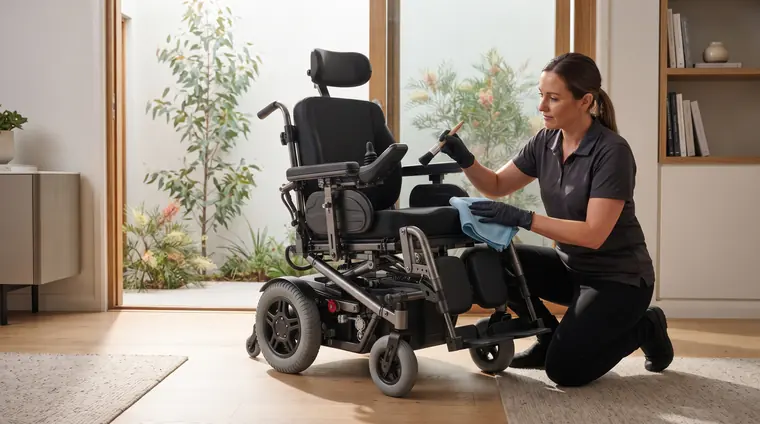
What can build up on a wheelchair?
Think about everything your wheelchair encounters during an ordinary day. Your hands repeatedly touch the armrests, controls, push handles, brakes or hand rims. Wheels and castors travel across indoor and outdoor surfaces. Cushions and backrests stay in close contact with clothing and the body for long periods.
Then there are the less visible areas:
- underneath cushions
- around brackets and hinges
- between frame components
- around wheels and castors
- underneath armrests
- around footplates
- inside seams and textured materials
- around frequently touched controls
These areas are difficult to reach during everyday cleaning, and gradually accumulate debris.
What are biofilms?
One reason cleaning matters is something you may never actually see: biofilms. These are communities of microorganisms that attach to surfaces and become surrounded by a protective matrix.
Research in healthcare environments has shown that biofilms can persist on both wet and dry surfaces, and can be more difficult to remove than ordinary surface contamination.
This is one reason why making a surface look clean does not necessarily mean every area of a complex piece of mobility equipment has been thoroughly cleaned. There is more on this in our article on what the research says about wheelchair hygiene.
Everyday wiping still matters
Routine cleaning is an important part of looking after your wheelchair. Frequently touched areas include push handles, armrests, hand rims, brake levers, joystick and control surfaces, seat and backrest surfaces, straps and positioning supports, and footplates.
How these components should be cleaned depends on the wheelchair, its materials and the manufacturer's instructions.
This is particularly important with powered wheelchairs. Electronic controls, joysticks, motors, batteries and electrical connections may require specific cleaning methods. Always follow the equipment manufacturer's cleaning and care recommendations rather than assuming one product or disinfectant suits every wheelchair.
Do not forget the cushion
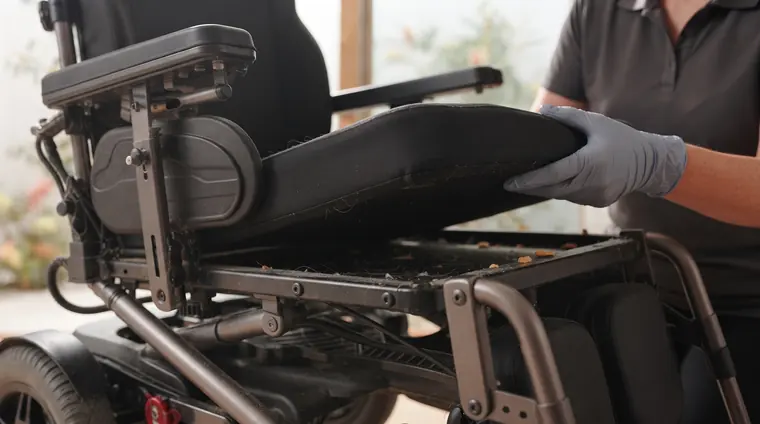
Wheelchair cushions deserve particular attention. They are used for long periods and are exposed to heat, moisture and everyday spills.
Where the cushion and the manufacturer's instructions allow:
- regularly inspect the cushion and its cover
- clean removable covers according to their care instructions
- check underneath the cushion for moisture or debris
- allow components to dry properly before reassembly
- inspect seams, zips and the surrounding areas where debris collects
Never machine-wash a wheelchair cushion or cover unless the manufacturer specifically states it is safe to do so. Some specialist cushions contain foam, air cells, gel or other materials that need particular care, and washing can ruin them.
What about the wheels?
Wheels are one of the easiest areas to overlook. Unlike the upper surfaces of a wheelchair, tyres and castors are continually in contact with floors, pathways and outdoor environments.
Hair, fibres, dust and other debris also collect around castor assemblies, axles and wheel components. Including these areas in your routine gives a more complete approach than simply wiping the seat and armrests.
Routine cleaning and detailed cleaning are different
Everyday cleaning maintains the frequently touched and easily accessible surfaces. A more detailed clean focuses on areas that are difficult to access during normal day-to-day maintenance.
That can include the accessible areas around wheels, castors, frames, brackets, joints, footrests, armrests, seating components, controls and other frequently contacted surfaces.
The exact process should always suit the wheelchair's construction, materials and the manufacturer's requirements.
How often should a wheelchair be cleaned?
There is not one schedule that suits every wheelchair user. Cleaning requirements depend on:
- how frequently the wheelchair is used
- whether it is a personal or shared wheelchair
- where the equipment is used
- exposure to food, spills, moisture or outdoor environments
- the user's individual circumstances
- the manufacturer's recommendations
Frequently touched surfaces benefit from regular routine attention, while visible spills or contamination should be dealt with promptly using an appropriate method. Periodic detailed cleaning then complements that everyday maintenance. Our guide on how often to book a professional clean goes into this further.
A cleaner chair is easier to care for
Regular cleaning is not only about appearance. Removing accumulated dirt and debris also makes it easier to inspect the equipment and notice areas that may need maintenance or professional servicing.
Cleaning does not replace mechanical servicing, repairs or clinical advice, but it forms an important part of taking care of equipment that is relied on every day.
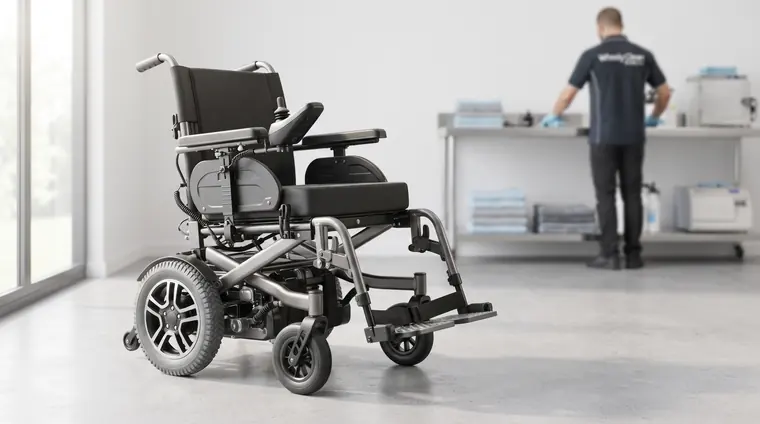
Professional cleaning with Wheely Clean Mobility
A wheelchair is a highly personal and important part of everyday life. Our detailed cleaning service is designed to complement regular at-home care by giving attention to the areas that are difficult to reach during everyday cleaning.
Whether you are a wheelchair user, a family member, a support worker or an organisation responsible for mobility equipment, we can help you keep a cleaner and better-cared-for chair.
Because good wheelchair care should go beyond what you can see.
Please note. This is general guidance, not clinical or infection-control advice. Always follow the cleaning instructions supplied with your wheelchair, cushion and control system, and speak with your occupational therapist or treating team about anything specific to your equipment or health.
Need a clean booked? Wheely Clean Mobility cleans wheelchairs and mobility equipment across the Perth metropolitan area, in your own home. See our services or book a time.